Increasing retention via engaging actions
Project:
Increasing retention via engaging actions
Content
COMPANY:
Dailymotion
Dailymotion
ROLE:
Product design, Product management
Content
SCOPE:
Consumer tech, Product design, Mobile app
TEAM:
Data team, Devs, Product manager, QA, User research team
Content
Timeline:
1 year
Context
When I joined Dailymotion, the mobile app was primarily a 16:9 video consumption product focused on news and sports. The audience was mostly men aged 30–50, engagement was low, and the product was not growing. In 2022–2023, the company made a strategic shift on the consumer side toward a social-media–oriented experience. Mobile apps became the experimentation playground, with successful patterns later adapted to the web rather than mirrored from it. This pivot required rethinking the product foundations—not only visually, but in terms of behaviors, habits, and social dynamics.
Problem
In 2023, Dailymotion rebranded its app for the first time since 2014 as part of a strategic shift from a B2B video platform toward a B2C, social-media-first product. The in-app branding introduced a theme-based system with four rotating primary colors, changing the app’s appearance every time it was opened.
While ambitious in intent, this approach quickly revealed its limits. The system introduced significant design and engineering complexity, slowed down iteration at a moment when product-market fit was still uncertain, and proved difficult to scale across features and components. More importantly, the visual identity felt heavy and misaligned with Gen Z expectations. By mid-2024, the branding was no longer enabling the product — it was actively slowing it down.
In 2023, Dailymotion rebranded its app for the first time since 2014 as part of a strategic shift from a B2B video platform toward a B2C, social-media-first product. The in-app branding introduced a theme-based system with four rotating primary colors, changing the app’s appearance every time it was opened.
While ambitious in intent, this approach quickly revealed its limits. The system introduced significant design and engineering complexity, slowed down iteration at a moment when product-market fit was still uncertain, and proved difficult to scale across features and components. More importantly, the visual identity felt heavy and misaligned with Gen Z expectations. By mid-2024, the branding was no longer enabling the product — it was actively slowing it down.


PREVIOUS LIKE EXPERIENCE
Challenge
The challenge was not simply to add likes or comments, but to fundamentally shift user behavior from passive viewing to active participation. This meant designing social actions that were immediately understandable, easy to adopt, and scalable across a diverse audience, while also aligning with Dailymotion’s values of inclusion and less polarized discourse. At the same time, the team had to work within real constraints: moderation costs, performance on native apps, deeply ingrained social media habits, and the risk of introducing novelty that would not sustain long-term adoption. The core tension was finding the right balance between innovation and familiarity—introducing richer expression without increasing cognitive load or fragmenting the experience.


Design process
We started by addressing the foundation: the video format itself. Moving from a 16:9 feed to a vertical feed unlocked the possibility of modern, gesture-based social interactions. From there, we focused on the two most fundamental social actions: expressing appreciation and participating in conversations.
Rather than treating likes and comments as isolated features, we approached them as a single engagement system. For each iteration, we defined explicit hypotheses, prototyped interactions, ran user tests, and evaluated results through both qualitative feedback and quantitative metrics. Throughout the process, we continuously reassessed assumptions, collaborated cross-functionally, and accepted when ideas did not scale, adjusting strategy accordingly.
We started by addressing the foundation: the video format itself. Moving from a 16:9 feed to a vertical feed unlocked the possibility of modern, gesture-based social interactions. From there, we focused on the two most fundamental social actions: expressing appreciation and participating in conversations.
Rather than treating likes and comments as isolated features, we approached them as a single engagement system. For each iteration, we defined explicit hypotheses, prototyped interactions, ran user tests, and evaluated results through both qualitative feedback and quantitative metrics. Throughout the process, we continuously reassessed assumptions, collaborated cross-functionally, and accepted when ideas did not scale, adjusting strategy accordingly.
We started by addressing the foundation: the video format itself. Moving from a 16:9 feed to a vertical feed unlocked the possibility of modern, gesture-based social interactions. From there, we focused on the two most fundamental social actions: expressing appreciation and participating in conversations.
Rather than treating likes and comments as isolated features, we approached them as a single engagement system. For each iteration, we defined explicit hypotheses, prototyped interactions, ran user tests, and evaluated results through both qualitative feedback and quantitative metrics. Throughout the process, we continuously reassessed assumptions, collaborated cross-functionally, and accepted when ideas did not scale, adjusting strategy accordingly.


Evolution of each action
Rethinking Likes: From Binary to Expressive and Back Again
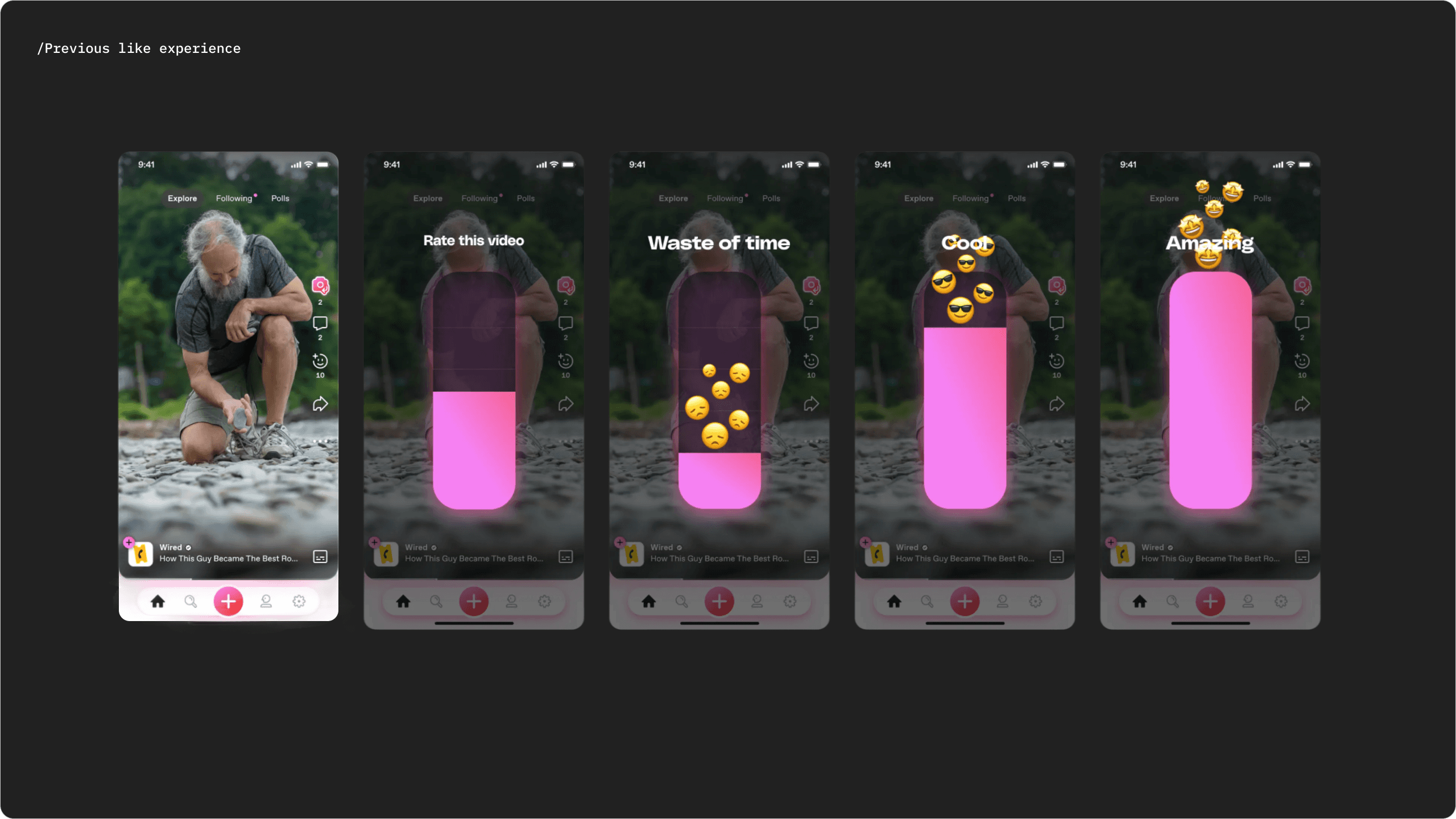
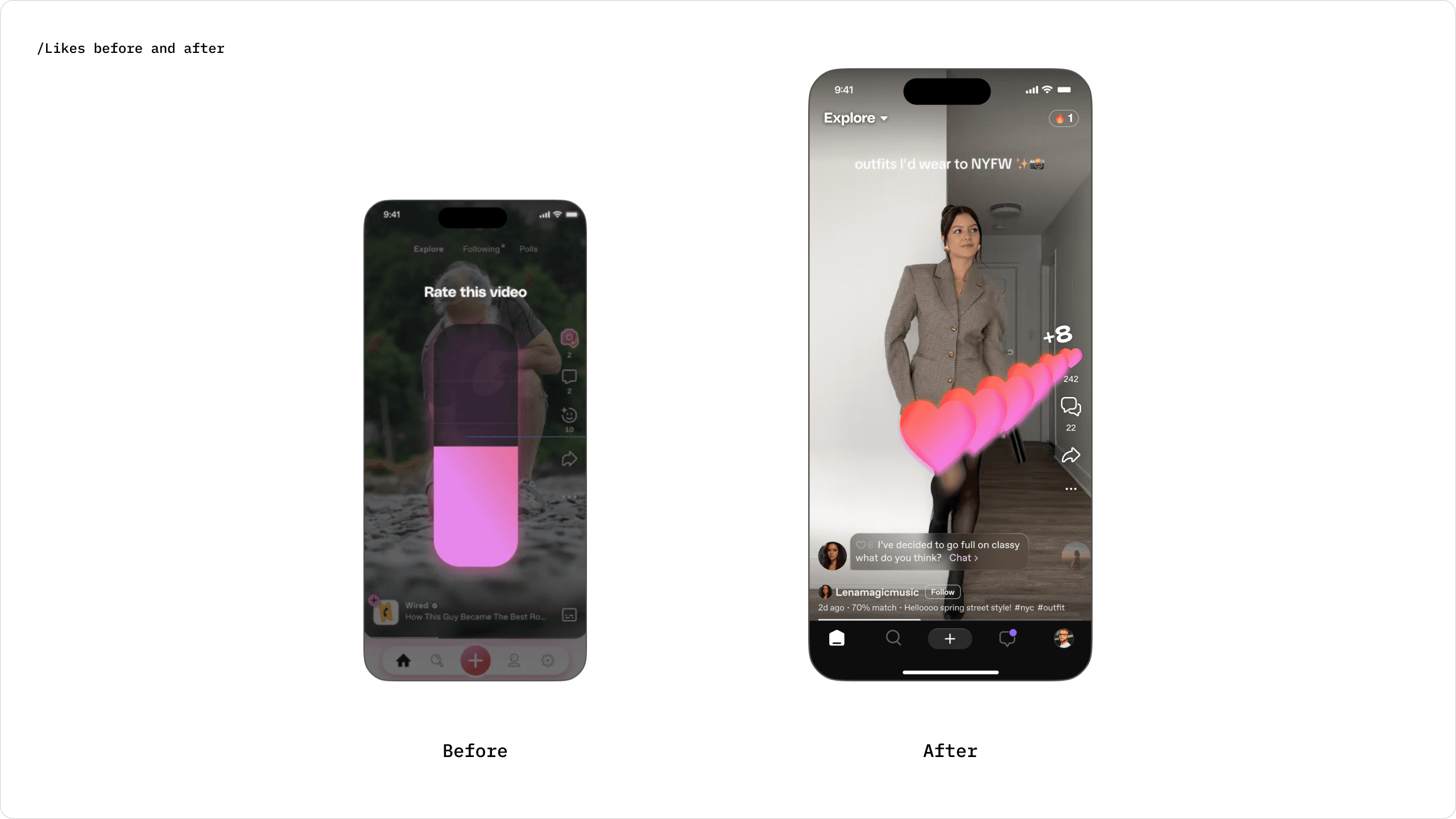
We initially hypothesized that a non-binary rating system would allow users to express nuance beyond a simple like, resulting in richer engagement and better recommendation signals. We introduced a slider-based interaction with five levels, supported by emojis, and explored different metaphors through prototyping and research. Early tests were encouraging: users understood the interaction, enjoyed the expressiveness, and likes per video start increased by 5%.
However, over time adoption declined. The interaction required more effort than a simple tap, the entry point was unfamiliar, and the mental model conflicted with deeply learned social media behaviors. While users were initially curious, friction eventually outweighed value. Based on these signals, we made the deliberate decision to abandon the non-binary system and return to a standard like icon, prioritizing long-term adoption over novelty.
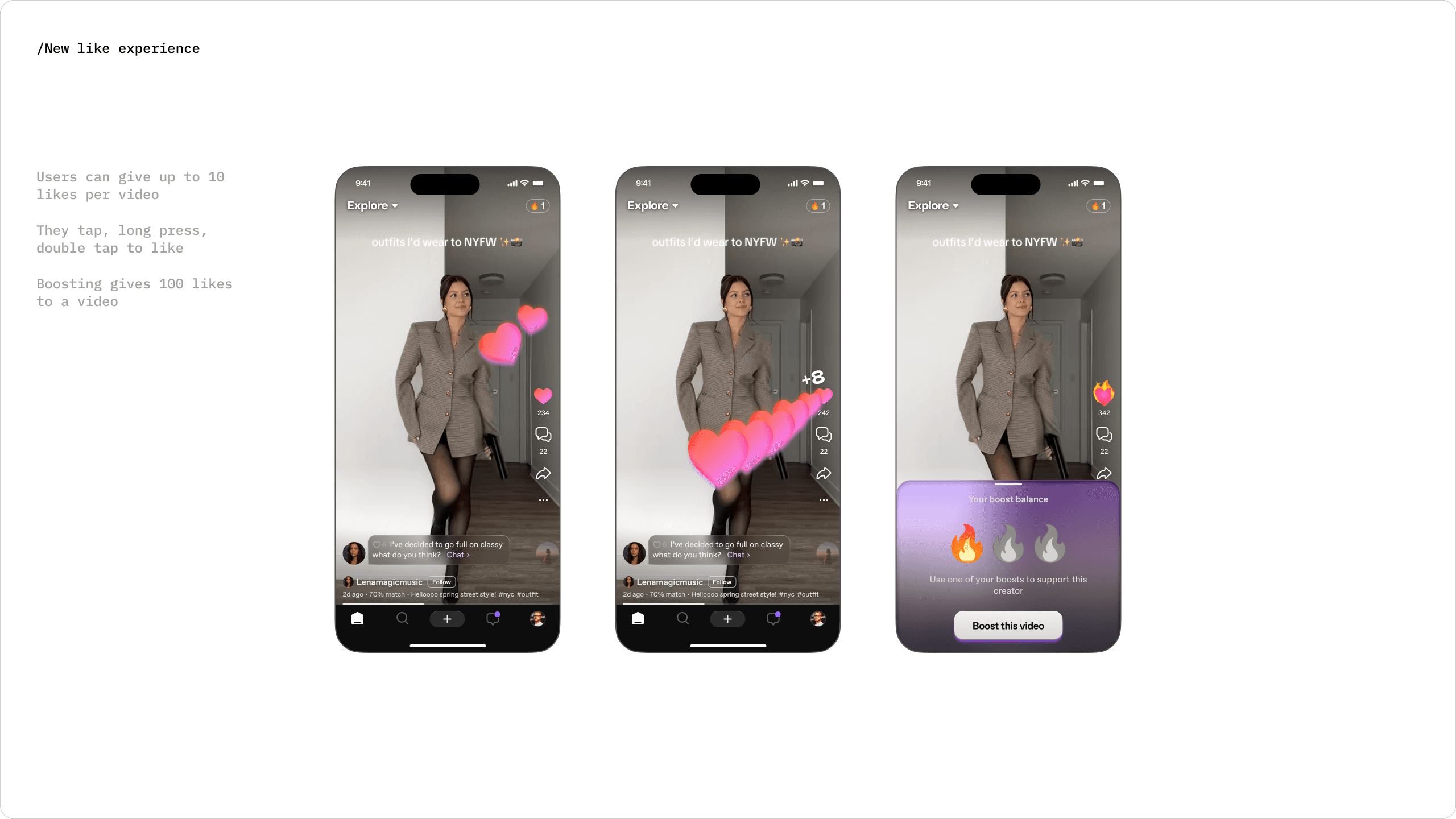
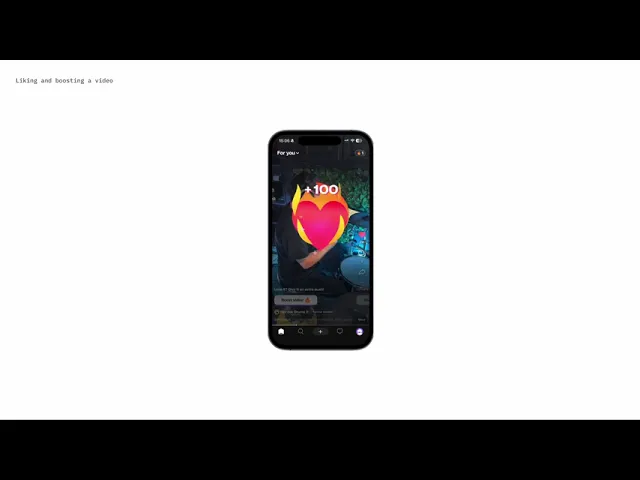
Instead of reinventing the action, we enriched it. We hypothesized that adding expressiveness through gestures—without changing the core mental model—would increase engagement. We introduced multiple intuitive gestures: single tap, double tap, triple tap, and long press. A long press triggered playful, haptic-enhanced heart animations shooting from the user’s thumb and landing on the like icon. Likes became cumulative, allowing users to support a video from 1 to 10. This preserved simplicity while adding depth, delight, and clearer signals of support for creators.
Building Conversations: Text Comments & Video Reacts
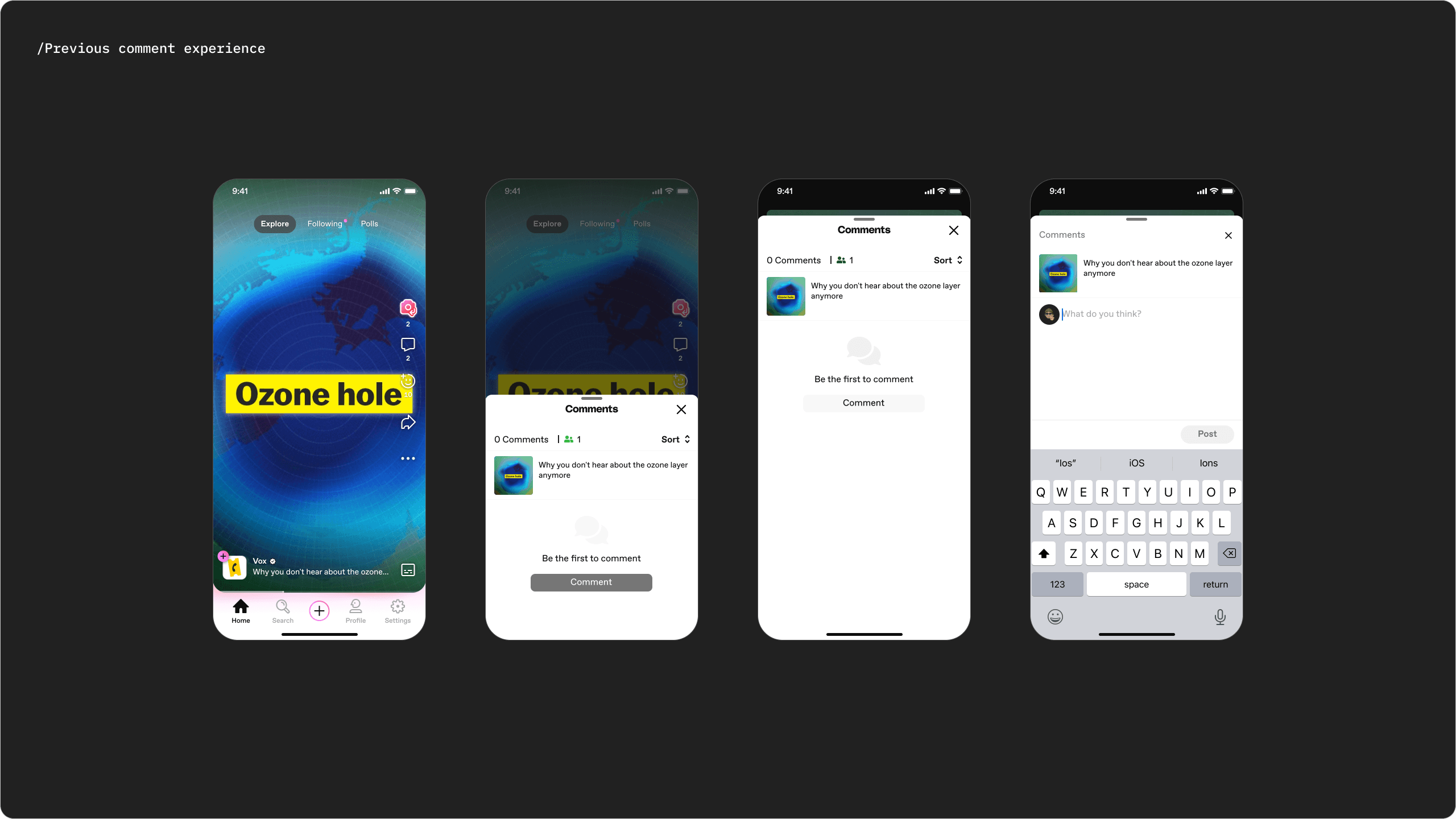
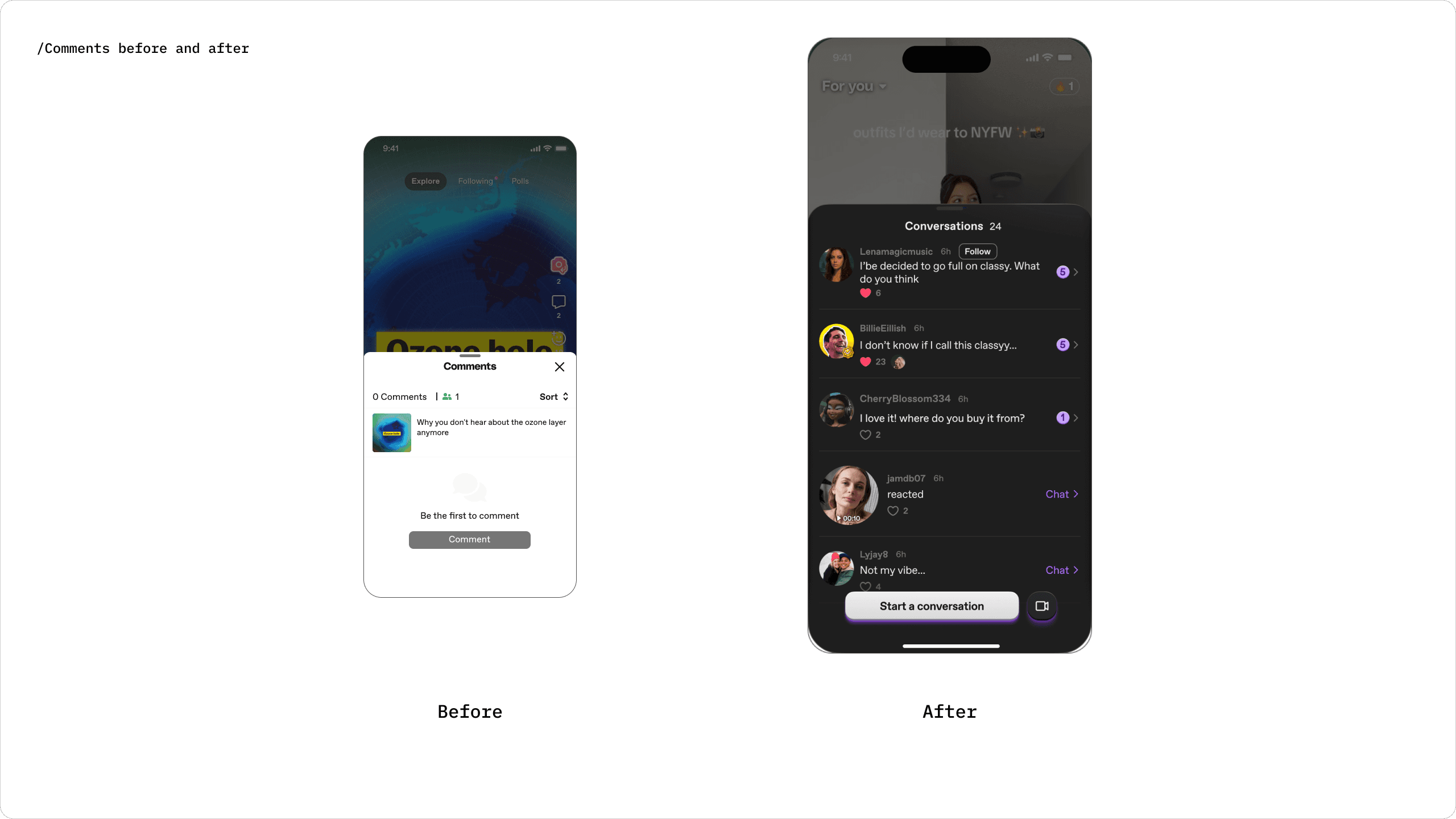
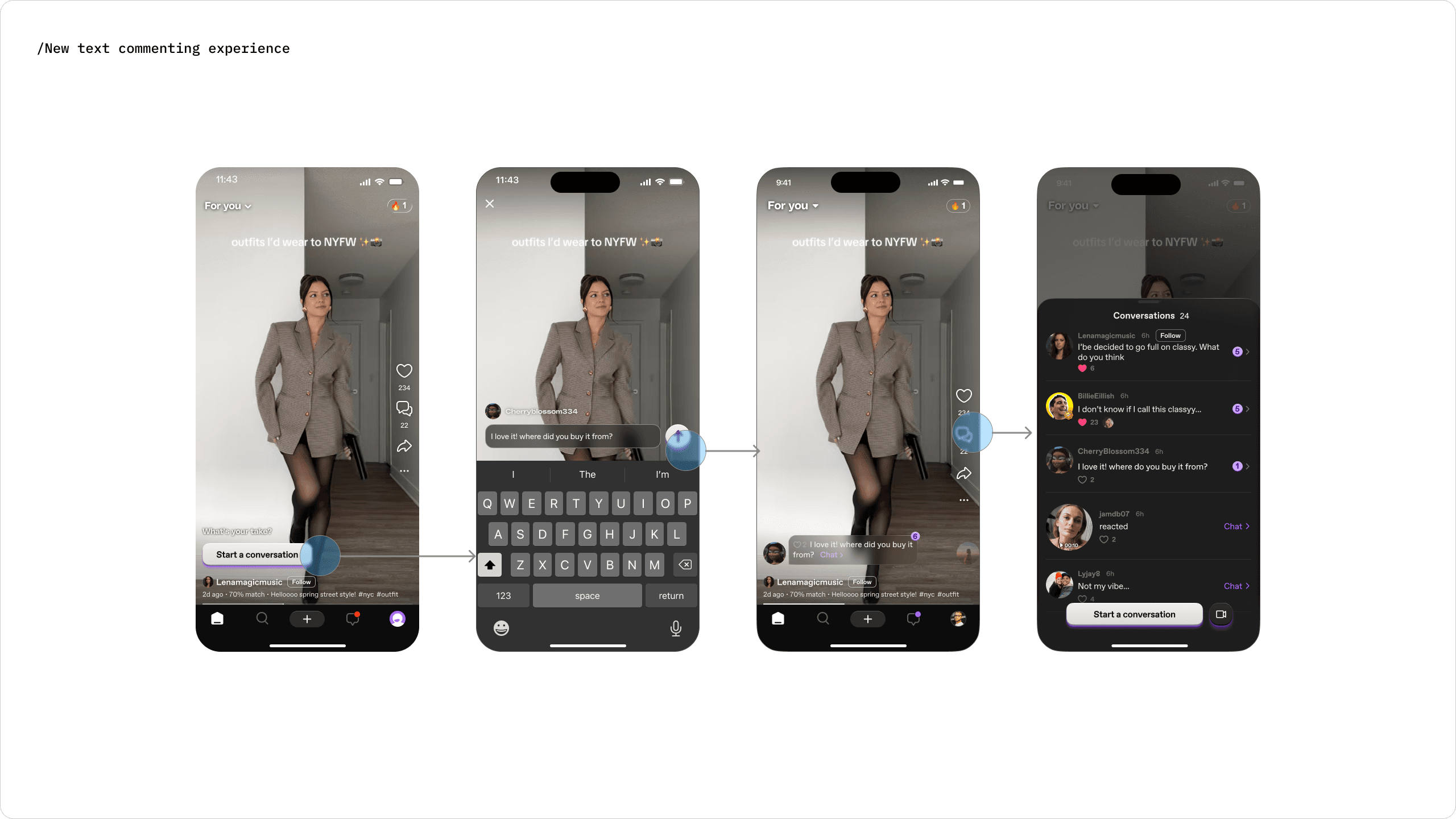
Comments initially existed via a third-party web view chosen to avoid building moderation in-house. In practice, this led to slow performance, missing comments, unreliable notifications, and a fragmented experience across app and web. We made the strategic decision to build native comments and handle moderation internally, accepting the added complexity in exchange for control, reliability, and integration. This shift immediately improved trust and usability, and comments per user per month increased by 15%.
To further increase engagement, we surfaced comments directly in the feed through swipeable cards overlaid on the video player. Comments became part of the viewing experience rather than a hidden destination, increasing both visibility and participation.
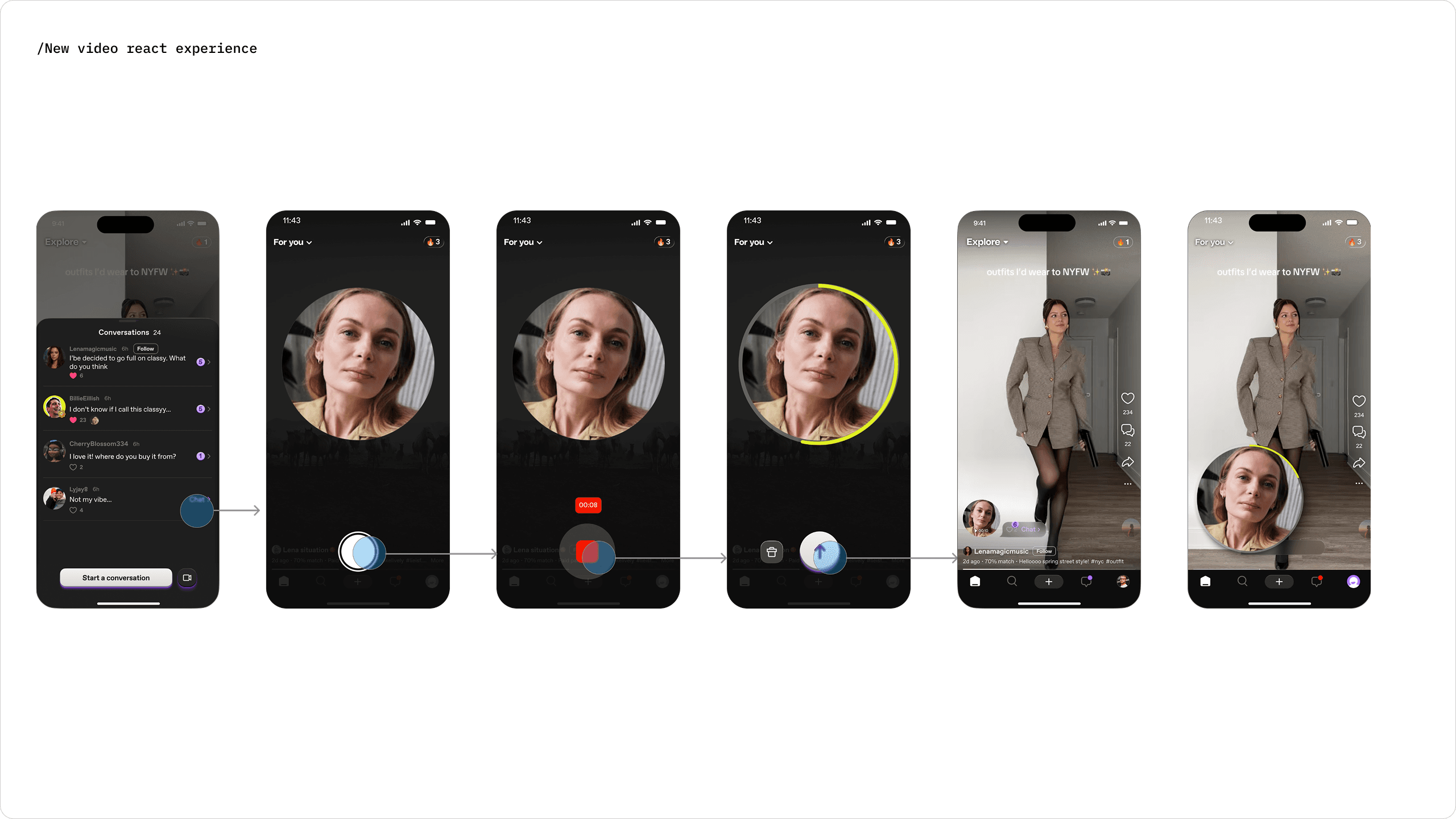
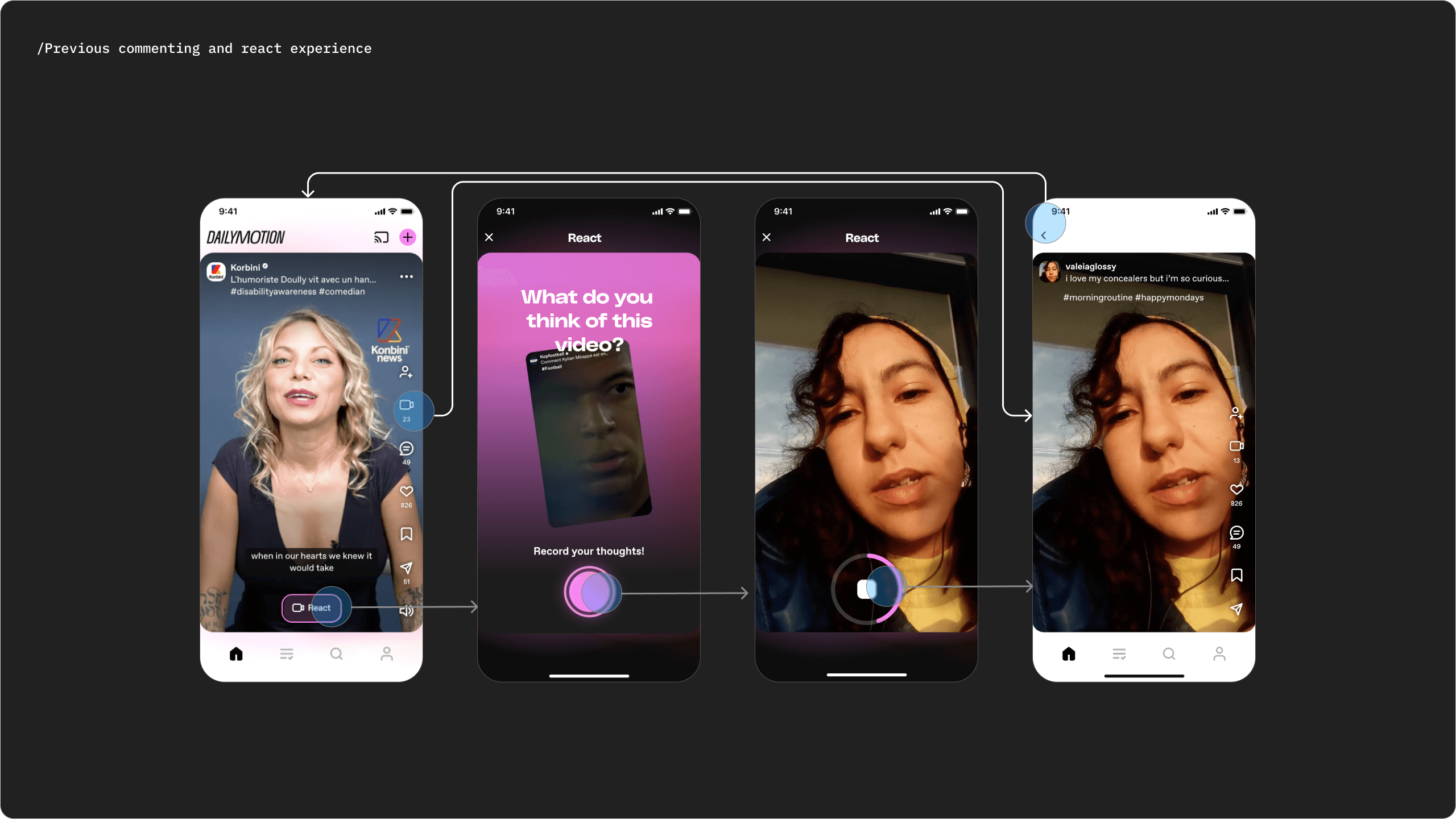
We also explored video comments, called Reacts. The first implementation failed: Reacts lived in a separate nested feed, opened the front camera without clear context, and left users confused about where and why to consume this content. Usage was extremely low. The key insight was that video reactions are comments, not content. We integrated Reacts directly into the comment experience alongside text comments, as short circular videos similar to video notes. Reacts were also surfaced in the feed cards. This reframing clarified the mental model and increased Reacts per video from 1 to 6.
Rethinking Likes: From Binary to Expressive and Back Again
We initially hypothesized that a non-binary rating system would allow users to express nuance beyond a simple like, resulting in richer engagement and better recommendation signals. We introduced a slider-based interaction with five levels, supported by emojis, and explored different metaphors through prototyping and research. Early tests were encouraging: users understood the interaction, enjoyed the expressiveness, and likes per video start increased by 5%.
However, over time adoption declined. The interaction required more effort than a simple tap, the entry point was unfamiliar, and the mental model conflicted with deeply learned social media behaviors. While users were initially curious, friction eventually outweighed value. Based on these signals, we made the deliberate decision to abandon the non-binary system and return to a standard like icon, prioritizing long-term adoption over novelty.
Instead of reinventing the action, we enriched it. We hypothesized that adding expressiveness through gestures—without changing the core mental model—would increase engagement. We introduced multiple intuitive gestures: single tap, double tap, triple tap, and long press. A long press triggered playful, haptic-enhanced heart animations shooting from the user’s thumb and landing on the like icon. Likes became cumulative, allowing users to support a video from 1 to 10. This preserved simplicity while adding depth, delight, and clearer signals of support for creators.
Building Conversations: Text Comments & Video Reacts
Comments initially existed via a third-party web view chosen to avoid building moderation in-house. In practice, this led to slow performance, missing comments, unreliable notifications, and a fragmented experience across app and web. We made the strategic decision to build native comments and handle moderation internally, accepting the added complexity in exchange for control, reliability, and integration. This shift immediately improved trust and usability, and comments per user per month increased by 15%.
To further increase engagement, we surfaced comments directly in the feed through swipeable cards overlaid on the video player. Comments became part of the viewing experience rather than a hidden destination, increasing both visibility and participation.
We also explored video comments, called Reacts. The first implementation failed: Reacts lived in a separate nested feed, opened the front camera without clear context, and left users confused about where and why to consume this content. Usage was extremely low. The key insight was that video reactions are comments, not content. We integrated Reacts directly into the comment experience alongside text comments, as short circular videos similar to video notes. Reacts were also surfaced in the feed cards. This reframing clarified the mental model and increased Reacts per video from 1 to 6.
Rethinking Likes: From Binary to Expressive and Back Again
We initially hypothesized that a non-binary rating system would allow users to express nuance beyond a simple like, resulting in richer engagement and better recommendation signals. We introduced a slider-based interaction with five levels, supported by emojis, and explored different metaphors through prototyping and research. Early tests were encouraging: users understood the interaction, enjoyed the expressiveness, and likes per video start increased by 5%.
However, over time adoption declined. The interaction required more effort than a simple tap, the entry point was unfamiliar, and the mental model conflicted with deeply learned social media behaviors. While users were initially curious, friction eventually outweighed value. Based on these signals, we made the deliberate decision to abandon the non-binary system and return to a standard like icon, prioritizing long-term adoption over novelty.
Instead of reinventing the action, we enriched it. We hypothesized that adding expressiveness through gestures—without changing the core mental model—would increase engagement. We introduced multiple intuitive gestures: single tap, double tap, triple tap, and long press. A long press triggered playful, haptic-enhanced heart animations shooting from the user’s thumb and landing on the like icon. Likes became cumulative, allowing users to support a video from 1 to 10. This preserved simplicity while adding depth, delight, and clearer signals of support for creators.
Building Conversations: Text Comments & Video Reacts
Comments initially existed via a third-party web view chosen to avoid building moderation in-house. In practice, this led to slow performance, missing comments, unreliable notifications, and a fragmented experience across app and web. We made the strategic decision to build native comments and handle moderation internally, accepting the added complexity in exchange for control, reliability, and integration. This shift immediately improved trust and usability, and comments per user per month increased by 15%.
To further increase engagement, we surfaced comments directly in the feed through swipeable cards overlaid on the video player. Comments became part of the viewing experience rather than a hidden destination, increasing both visibility and participation.
We also explored video comments, called Reacts. The first implementation failed: Reacts lived in a separate nested feed, opened the front camera without clear context, and left users confused about where and why to consume this content. Usage was extremely low. The key insight was that video reactions are comments, not content. We integrated Reacts directly into the comment experience alongside text comments, as short circular videos similar to video notes. Reacts were also surfaced in the feed cards. This reframing clarified the mental model and increased Reacts per video from 1 to 6.


Solution
In 2023, Dailymotion rebranded its app for the first time since 2014 as part of a strategic shift from a B2B video platform toward a B2C, social-media-first product. The in-app branding introduced a theme-based system with four rotating primary colors, changing the app’s appearance every time it was opened.
While ambitious in intent, this approach quickly revealed its limits. The system introduced significant design and engineering complexity, slowed down iteration at a moment when product-market fit was still uncertain, and proved difficult to scale across features and components. More importantly, the visual identity felt heavy and misaligned with Gen Z expectations. By mid-2024, the branding was no longer enabling the product — it was actively slowing it down.
In 2023, Dailymotion rebranded its app for the first time since 2014 as part of a strategic shift from a B2B video platform toward a B2C, social-media-first product. The in-app branding introduced a theme-based system with four rotating primary colors, changing the app’s appearance every time it was opened.
While ambitious in intent, this approach quickly revealed its limits. The system introduced significant design and engineering complexity, slowed down iteration at a moment when product-market fit was still uncertain, and proved difficult to scale across features and components. More importantly, the visual identity felt heavy and misaligned with Gen Z expectations. By mid-2024, the branding was no longer enabling the product — it was actively slowing it down.
In 2023, Dailymotion rebranded its app for the first time since 2014 as part of a strategic shift from a B2B video platform toward a B2C, social-media-first product. The in-app branding introduced a theme-based system with four rotating primary colors, changing the app’s appearance every time it was opened.
While ambitious in intent, this approach quickly revealed its limits. The system introduced significant design and engineering complexity, slowed down iteration at a moment when product-market fit was still uncertain, and proved difficult to scale across features and components. More importantly, the visual identity felt heavy and misaligned with Gen Z expectations. By mid-2024, the branding was no longer enabling the product — it was actively slowing it down.


Data
15
%
more likes/video
30
%
%
%
more comments & reacts / video/ user
Learnings
This project reinforced that social features succeed or fail at the level of habit, not novelty. Designing expressive interactions is only valuable if they align with users’ learned behaviors and require minimal cognitive effort to adopt. I learned that visibility is as important as functionality—features that are hidden or disconnected from the core experience struggle to scale. The work also highlighted the importance of knowing when to persist and when to pivot: experimentation is only effective when paired with the willingness to abandon ideas that do not sustain engagement. Ultimately, building social products at scale requires systems thinking, humility, and continuous iteration grounded in real user behavior.
What's next
We are now focusing on optimising the comment experience on home. We are iterating on the replies experience and how can we make the experience more community focused.