Data visualizing the Extinction of Biodiversity
Data visualizing the Extinction of Biodiversity
Data visualizing the Extinction of Biodiversity
COMPANY:
Sorbonne university
ROLE:
Web designer, Data analyst, Data Designer
TEAM:
N/A
COMPANY:
Sorbonne university
ROLE:
Web designer, Data analyst, Data Designer
TEAM:
N/A
COMPANY:
Sorbonne university
ROLE:
Web designer, Data analyst, Data Designer
TEAM:
N/A
SCOPE:
Data visualisation, Web design,
Timeline:
3 months
Problem
The reality of the 6th mass extinction is widely discussed in scientific and academic circles, yet remains abstract, fragmented, and emotionally distant for most people. Existing reports and datasets are often complex, siloed, and difficult to interpret, making it hard for non-experts to grasp the scale, speed, and interconnected nature of biodiversity loss. The problem was not a lack of data, but a lack of accessible, coherent narratives that could connect biodiversity decline with human activity in a way that felt tangible, urgent, and impossible to ignore.

Challenge
The main challenge was transforming vast, evolving scientific datasets into an experience that could both inform and emotionally engage users without oversimplifying or sensationalizing the data. The project needed to balance scientific rigor with clarity, and accuracy with impact. Additionally, the data itself was not static: population metrics, environmental indicators, and real-world events continuously evolved, requiring a system that could adapt over time. The challenge was therefore not only to visualize complexity, but to design a living, scalable experience capable of reflecting an ongoing planetary crisis.
The main challenge was transforming vast, evolving scientific datasets into an experience that could both inform and emotionally engage users without oversimplifying or sensationalizing the data. The project needed to balance scientific rigor with clarity, and accuracy with impact. Additionally, the data itself was not static: population metrics, environmental indicators, and real-world events continuously evolved, requiring a system that could adapt over time. The challenge was therefore not only to visualize complexity, but to design a living, scalable experience capable of reflecting an ongoing planetary crisis.
The main challenge was transforming vast, evolving scientific datasets into an experience that could both inform and emotionally engage users without oversimplifying or sensationalizing the data. The project needed to balance scientific rigor with clarity, and accuracy with impact. Additionally, the data itself was not static: population metrics, environmental indicators, and real-world events continuously evolved, requiring a system that could adapt over time. The challenge was therefore not only to visualize complexity, but to design a living, scalable experience capable of reflecting an ongoing planetary crisis.
Design process
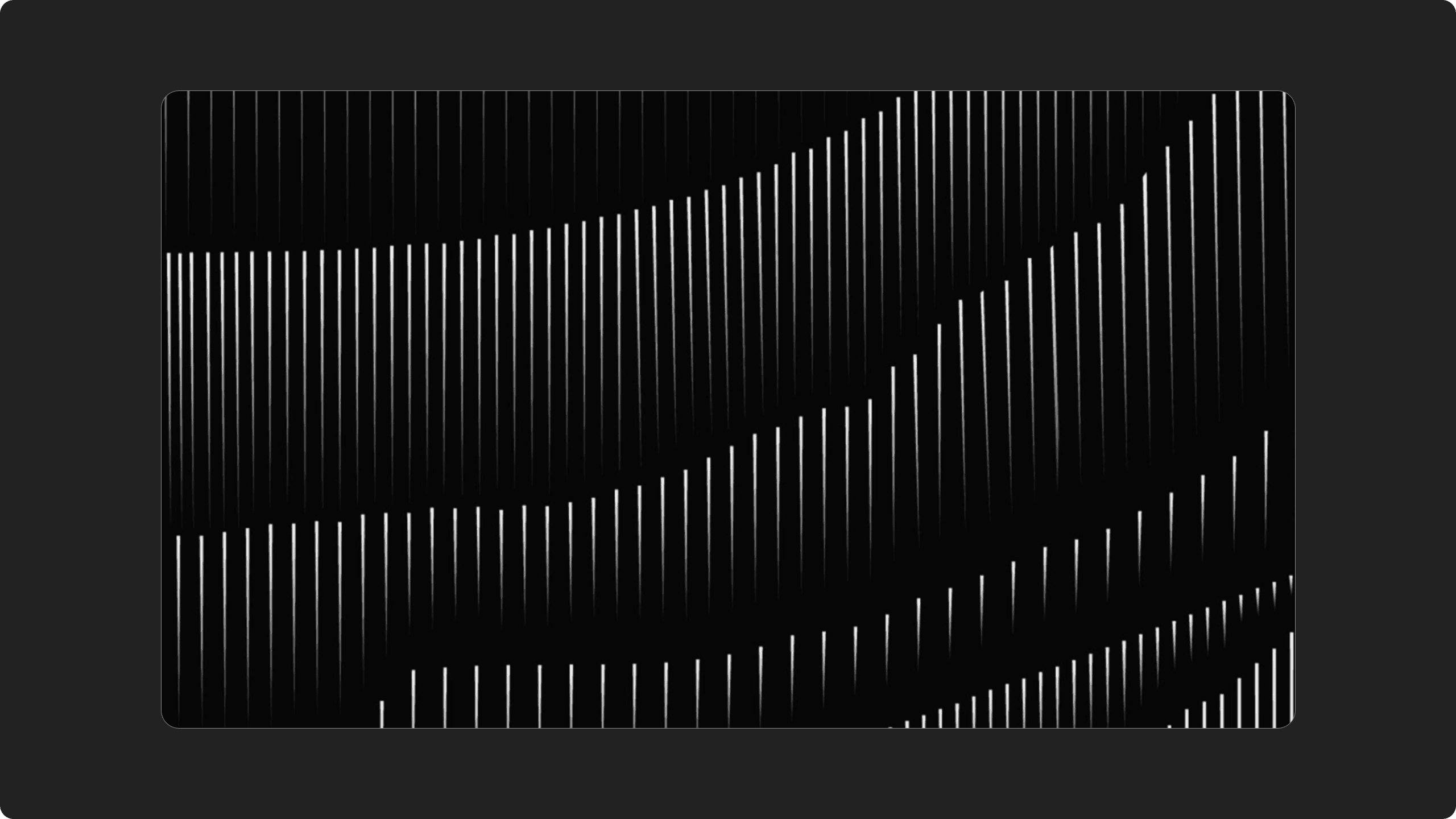
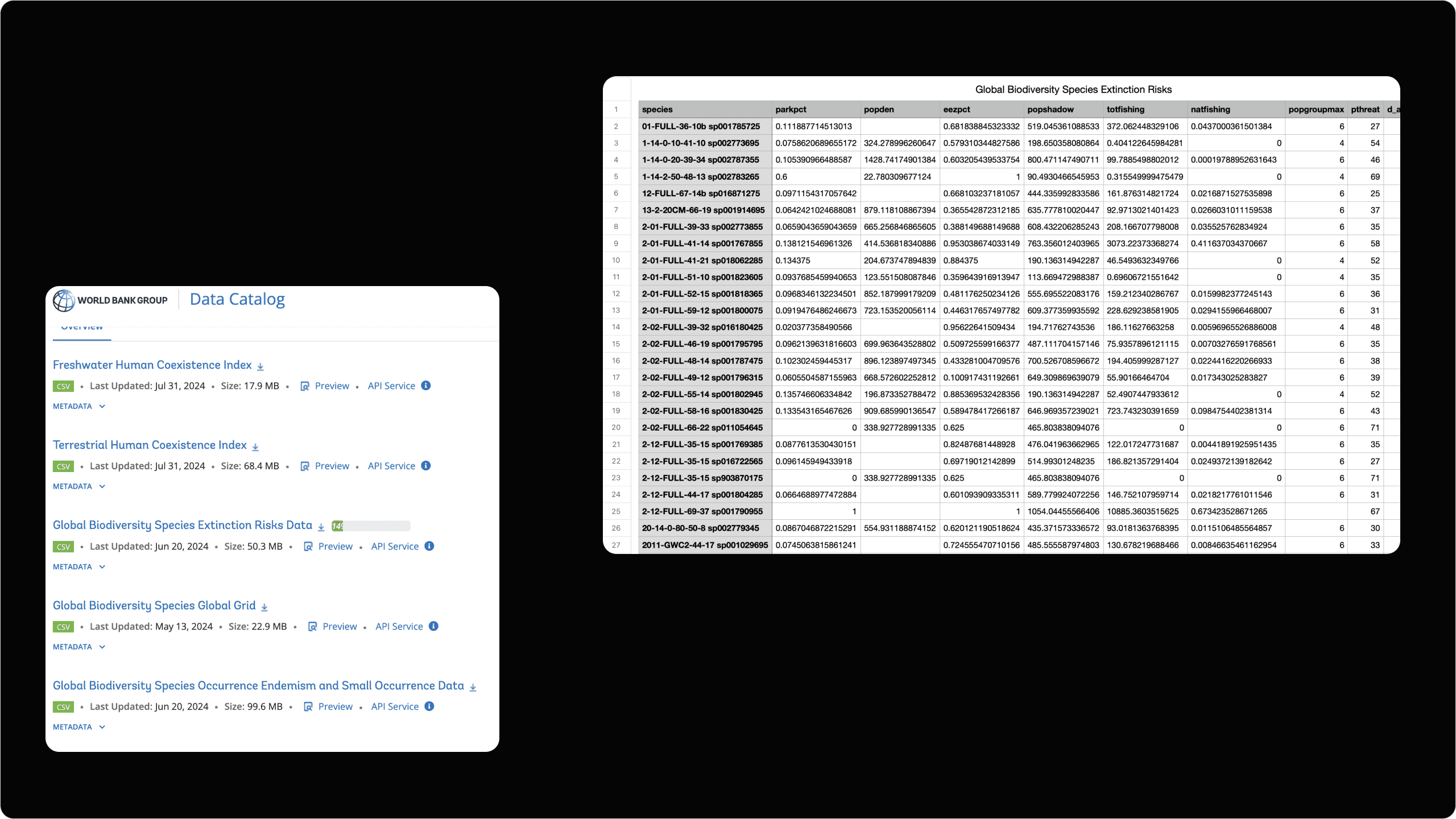
I approached the project by first acting as a data researcher and analyst, collecting and studying datasets related to population trends across major life groups—bacteria, fungi, plants, animals—alongside indicators of human impact such as deforestation, climate change, pollution, and population growth. I explored these datasets independently and in relation to one another, searching for correlations, tipping points, and patterns of acceleration. Under the guidance of Dr. David Bihanic, I iteratively translated these insights into visual hypotheses, validating that each visualization preserved the integrity of the data while remaining readable and meaningful. I then designed and coded the experience end to end, continuously refining both the narrative flow and the visual language as new data emerged.
I approached the project by first acting as a data researcher and analyst, collecting and studying datasets related to population trends across major life groups—bacteria, fungi, plants, animals—alongside indicators of human impact such as deforestation, climate change, pollution, and population growth. I explored these datasets independently and in relation to one another, searching for correlations, tipping points, and patterns of acceleration. Under the guidance of Dr. David Bihanic, I iteratively translated these insights into visual hypotheses, validating that each visualization preserved the integrity of the data while remaining readable and meaningful. I then designed and coded the experience end to end, continuously refining both the narrative flow and the visual language as new data emerged.
I approached the project by first acting as a data researcher and analyst, collecting and studying datasets related to population trends across major life groups—bacteria, fungi, plants, animals—alongside indicators of human impact such as deforestation, climate change, pollution, and population growth. I explored these datasets independently and in relation to one another, searching for correlations, tipping points, and patterns of acceleration. Under the guidance of Dr. David Bihanic, I iteratively translated these insights into visual hypotheses, validating that each visualization preserved the integrity of the data while remaining readable and meaningful. I then designed and coded the experience end to end, continuously refining both the narrative flow and the visual language as new data emerged.
Solution
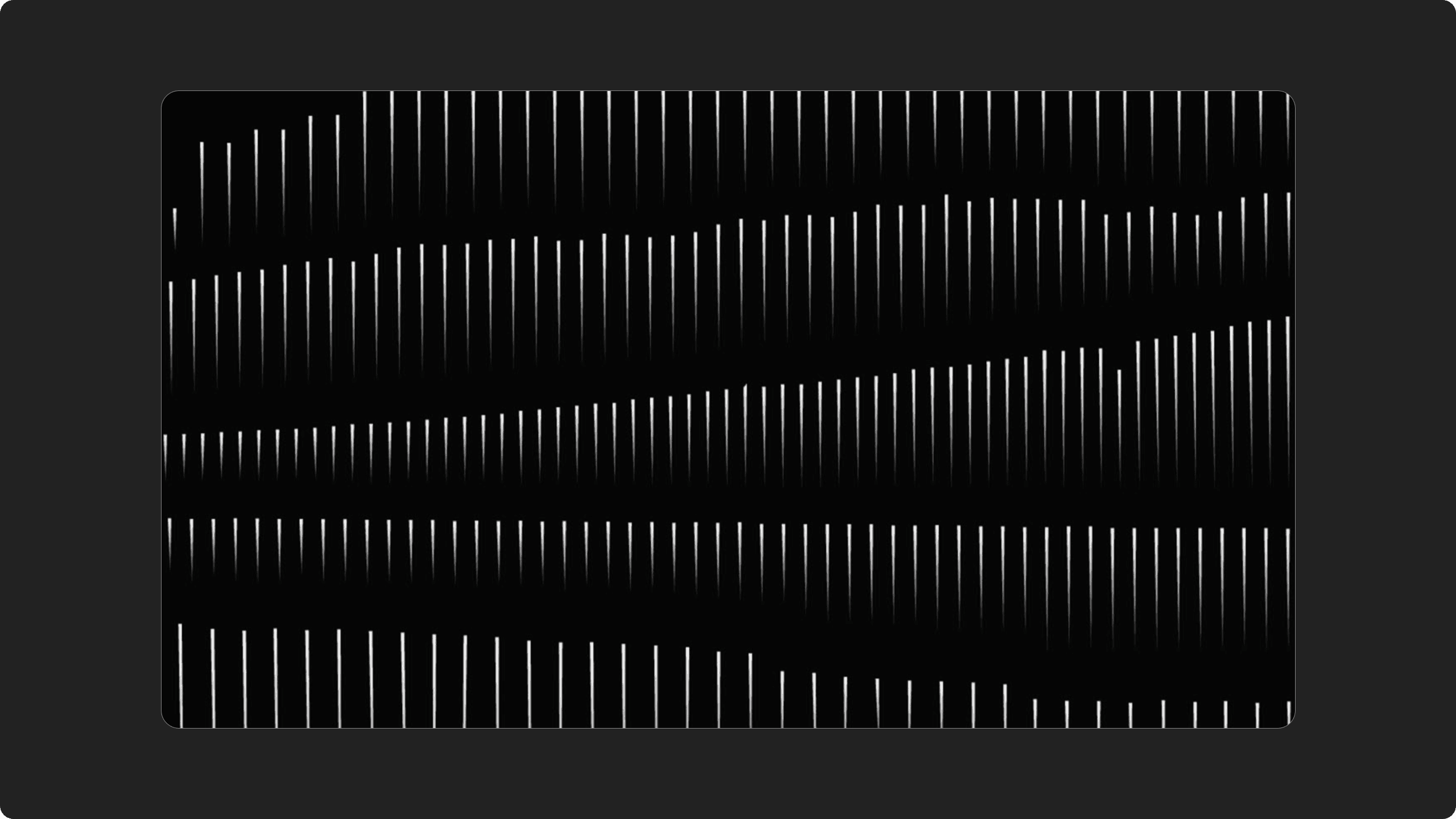
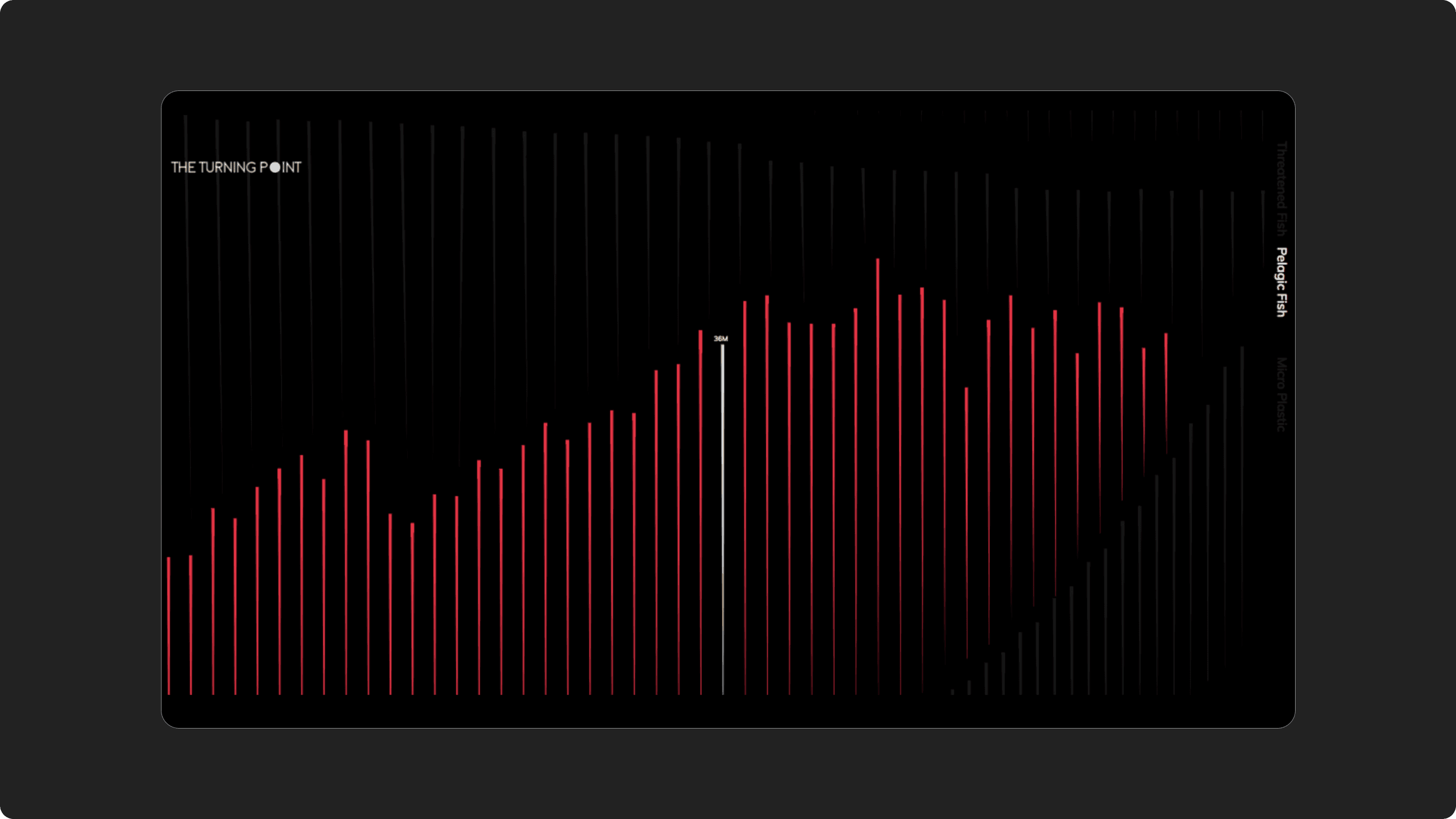
The solution took the form of a single-page, scroll-driven data visualization experience designed as a journey through time. As users scroll, they move from historical context into present-day trends and toward an uncertain future, with visualizations evolving to reflect the cumulative impact of biodiversity loss. Rather than presenting isolated charts, the experience layers data progressively, allowing patterns and correlations to emerge naturally. Visual tension, pacing, and transitions were intentionally crafted to create a sense of unease, reinforcing the gravity of the information without explicit commentary. The system was built to be adaptable, enabling updates as new data or major environmental events occur, ensuring that the project remains relevant and truthful over time.
The solution took the form of a single-page, scroll-driven data visualization experience designed as a journey through time. As users scroll, they move from historical context into present-day trends and toward an uncertain future, with visualizations evolving to reflect the cumulative impact of biodiversity loss. Rather than presenting isolated charts, the experience layers data progressively, allowing patterns and correlations to emerge naturally. Visual tension, pacing, and transitions were intentionally crafted to create a sense of unease, reinforcing the gravity of the information without explicit commentary. The system was built to be adaptable, enabling updates as new data or major environmental events occur, ensuring that the project remains relevant and truthful over time.
The solution took the form of a single-page, scroll-driven data visualization experience designed as a journey through time. As users scroll, they move from historical context into present-day trends and toward an uncertain future, with visualizations evolving to reflect the cumulative impact of biodiversity loss. Rather than presenting isolated charts, the experience layers data progressively, allowing patterns and correlations to emerge naturally. Visual tension, pacing, and transitions were intentionally crafted to create a sense of unease, reinforcing the gravity of the information without explicit commentary. The system was built to be adaptable, enabling updates as new data or major environmental events occur, ensuring that the project remains relevant and truthful over time.
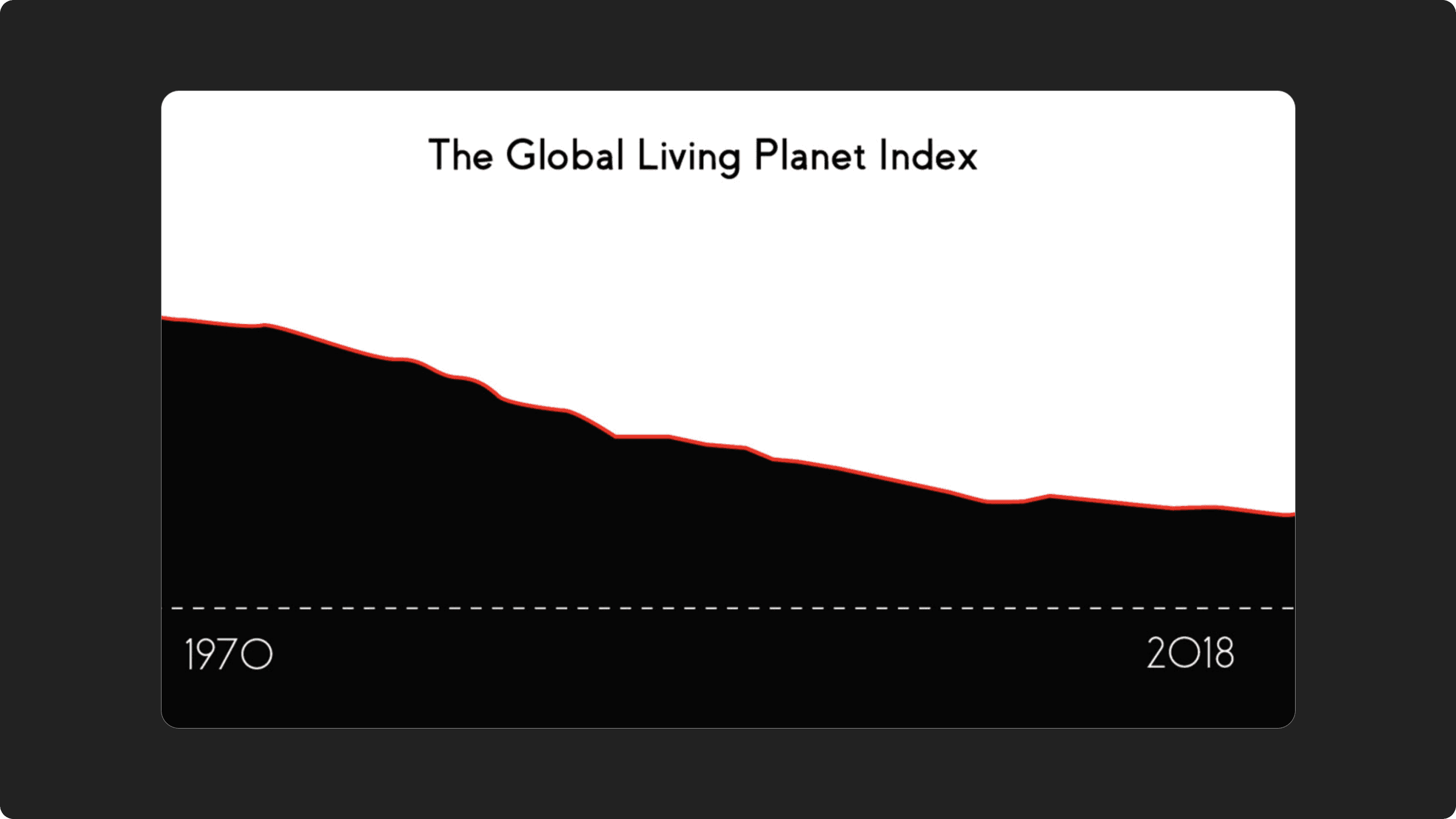
Data
0
%
0
%
%
%
Learnings
This project reinforced the idea that data alone does not create understanding—structure, narrative, and emotional pacing are just as critical. I learned the importance of designing systems that can evolve alongside their data, especially when working with real-world phenomena that are constantly changing. The experience also deepened my appreciation for interdisciplinary work, where research, analysis, design, and engineering must coexist seamlessly. Most importantly, Turning Point taught me that product and design can be powerful instruments for awareness and reflection, capable of translating abstract, global issues into experiences that feel personal, urgent, and meaningful.
This project reinforced the idea that data alone does not create understanding—structure, narrative, and emotional pacing are just as critical. I learned the importance of designing systems that can evolve alongside their data, especially when working with real-world phenomena that are constantly changing. The experience also deepened my appreciation for interdisciplinary work, where research, analysis, design, and engineering must coexist seamlessly. Most importantly, Turning Point taught me that product and design can be powerful instruments for awareness and reflection, capable of translating abstract, global issues into experiences that feel personal, urgent, and meaningful.
This project reinforced the idea that data alone does not create understanding—structure, narrative, and emotional pacing are just as critical. I learned the importance of designing systems that can evolve alongside their data, especially when working with real-world phenomena that are constantly changing. The experience also deepened my appreciation for interdisciplinary work, where research, analysis, design, and engineering must coexist seamlessly. Most importantly, Turning Point taught me that product and design can be powerful instruments for awareness and reflection, capable of translating abstract, global issues into experiences that feel personal, urgent, and meaningful.